Home › Yayoi · c. 300 BCE – 250 CE
The Yayoi Period: Rice Changes Everything
Quick version
- Wet-rice farming arrived from the Asian mainland and spread across Japan.
- Bronze and iron came too: bronze mostly for ritual, iron for tools and weapons.
- Surplus rice created rich and poor, and villages began to fight.
- Chinese records describe Queen Himiko of Yamatai sending envoys in 239 CE.
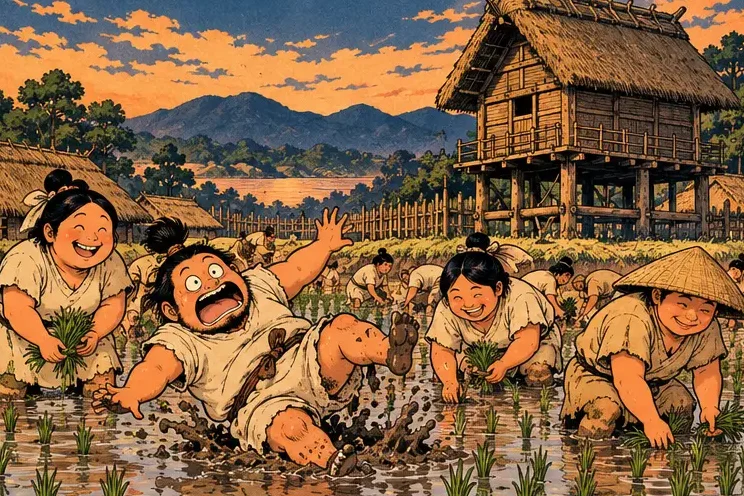
Around 2,300 years ago, new arrivals and new ideas crossed from the Korean Peninsula and the Asian mainland into northern Kyushu. They brought wet-rice farming, and Japan was never the same again.
Named after a street
The period takes its name from Yayoi, a neighbourhood in Tokyo where a new style of smooth, thin pottery was dug up in 1884. Archaeology can be that random.
Rice means rules
Growing rice takes teamwork: flooding fields, planting and harvesting together. It also produces a surplus that can be stored in raised storehouses, and whoever controls the storehouse controls a lot. So:
- Society split into leaders and ordinary farmers.
- Villages got moats and watchtowers (see Yoshinogari in Saga Prefecture) because neighbours began fighting over land and water.
- Small kingdoms formed.
Metal arrives
Bronze (bells called dōtaku, mirrors and swords) was mostly used for rituals and as status symbols. Iron was practical: tools and weapons.
Himiko of Yamatai
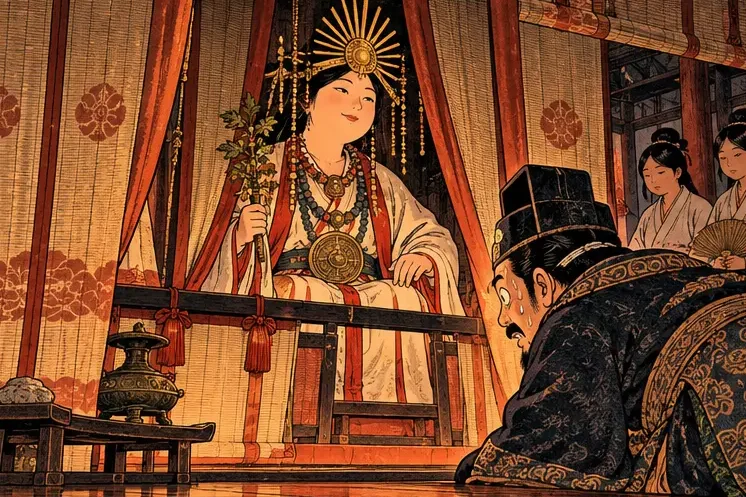
Our best written source is Chinese. The Wei Zhi (history of the Wei dynasty) says that around 239 CE a queen named Himiko ruled a land called Yamatai and sent envoys to the Wei court, receiving the title “King of Wa”. It adds that she used religious power to rule and was rarely seen. Where Yamatai actually was, northern Kyushu or the Kinai region around Nara, is still hotly debated.
See it today
- Yoshinogari Historical Park (Saga Prefecture): a reconstructed moated Yayoi village with watchtowers and storehouses.
- Toro Site (Shizuoka City): a Yayoi paddy-field village with reconstructed buildings.
Festival connection
Rice never stopped being sacred. Many shrines still hold rice-planting rites (otaue) in early summer, a direct echo of Yayoi ritual life. Browse the whole Japan Festival Atlas to find shrine rituals near your route.