Warrior Culture: Heike Tales, Mighty Statues and the Way of the Horse and Bow
Quick version
- Warriors prized 'the way of the horse and bow' (kyūba no michi): riding, archery, loyalty.
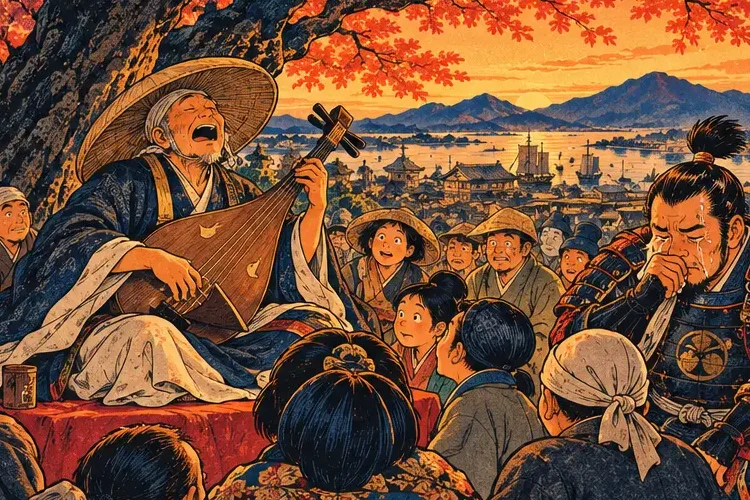
- The Tale of the Heike was performed by blind biwa-playing storytellers.
- Unkei and Kaikei carved powerful, realistic Buddhist sculptures.
- Warriors' homes were plain compared with the Heian nobles' mansions.
Kamakura warriors were not the polished courtiers of the Heian court. They lived by a simpler code, kyūba no michi, “the way of the horse and bow”: ride well, shoot well, serve your lord, and keep your honour. Their houses were plain, built to be practical and defensible.
The Tale of the Heike
The rise and fall of the Taira became the most famous story in Japanese literature. The Tale of the Heike (Heike Monogatari) opens with a line about the bell of a monastery and the impermanence of all things. It was recited to the accompaniment of the biwa (a lute) by blind storytellers called biwa hōshi, which helped spread it among people who could not read. Many scenes remain staples of Noh, kabuki and TV dramas.
Sculptors with muscles
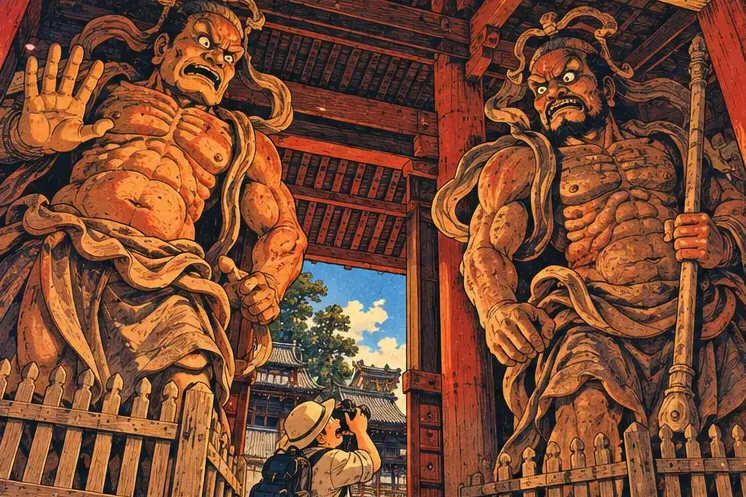
The Kamakura period produced some of Japan’s most striking sculpture. Unkei and Kaikei carved dynamic, realistic figures. The enormous Niō guardians (about 8 metres tall) at the South Gate of Tōdai-ji in Nara, finished in 1203, are attributed to a workshop led by them. Their muscles and glaring faces perfectly match the new warrior taste.
Poetry and reflection
The age of upheaval also produced thoughtful writing, such as Kamo no Chōmei’s Hōjōki, a short essay by a man who left city life to live in a tiny hut. Court poets compiled the Shin Kokinshū anthology around 1205.
See it today
- Tōdai-ji South Gate (Nara): the Niō guardians, free to view from outside.
- Kamakura: temples and cave tombs (yagura) in the hills.
- Kyoto National Museum: strong Kamakura sculpture and painting collections.
Festival connection
Samurai riding skills are still celebrated at the Moro Yabusame in November and at the Yabusame at Tsurugaoka Hachimangū in September.