Kamakura Buddhism: Faith for Everyone
Quick version
- Older Buddhism centred on aristocrats and big temples; new schools were simpler.
- Hōnen and Shinran taught Pure Land: chant Amida Buddha's name and be reborn in paradise.
- Nichiren taught devotion to the Lotus Sutra.
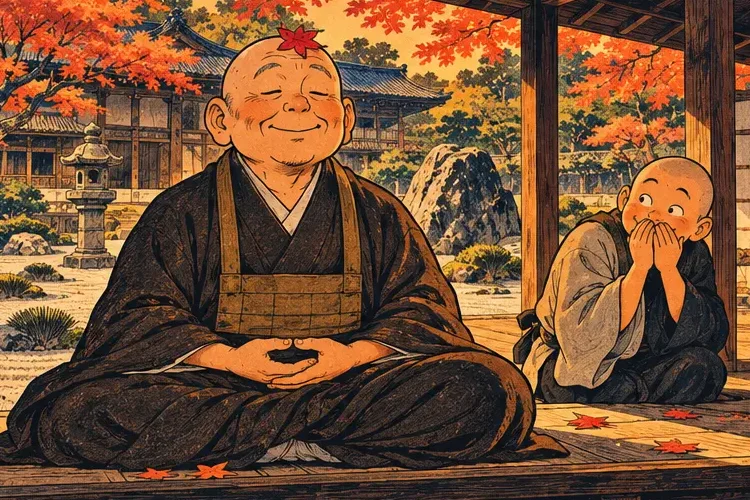
- Eisai and Dōgen brought Zen, which suited the discipline of the warrior class.
Before Kamakura, Buddhism in Japan was mostly an affair of emperors, nobles and large temples. Rituals were elaborate, and studying the texts took years. In an age of wars, famines and earthquakes, ordinary people wanted something simpler. Several monks obliged.
Pure Land: just say the name
Hōnen (1133–1212) taught that anyone could be reborn in the Pure Land of Amida Buddha by chanting Namu Amida Butsu (the nembutsu). His follower Shinran went further, teaching that faith alone is enough. This became Jōdo Shinshū, one of Japan’s largest Buddhist groups. Ippen spread the practice by dancing and travelling among the common people.
Nichiren: the Lotus Sutra
Nichiren (1222–1282) declared that the Lotus Sutra was the true teaching, and urged people to chant Namu Myōhō Renge Kyō. He criticised the government fiercely and was exiled, but his followers multiplied.
Zen: discipline and focus
Eisai brought Rinzai Zen from China, and Dōgen established Sōtō Zen, practised through seated meditation (zazen). The Hōjō and many warriors favoured Zen: its stress on self-discipline suited the military life, and temples such as Kenchō-ji (founded 1253) and Engaku-ji (1282) rose in Kamakura.
Art for the new age
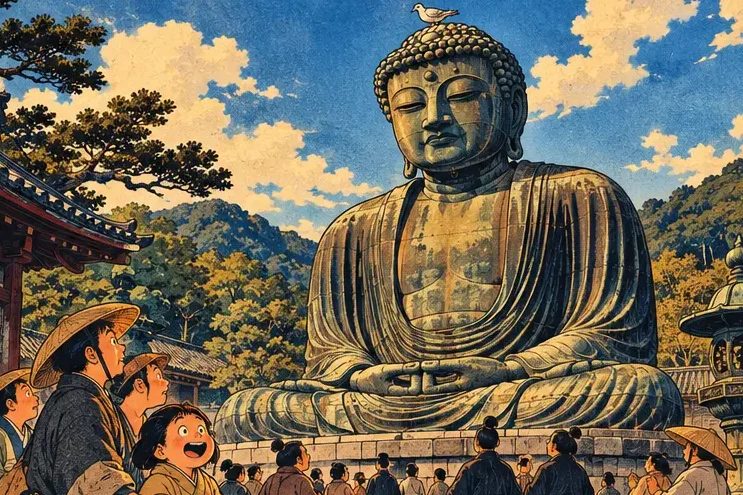
Kamakura-period sculpture is famous for its powerful realism. The bronze Great Buddha of Kamakura (Kōtoku-in), about 11.3 metres tall, was cast in the mid-1200s. Its hall was washed away by a tsunami in 1498, which is why it sits in the open air today.
See it today
- Kōtoku-in (Kamakura): the Great Buddha. You can even step inside the hollow statue for a small fee.
- Kenchō-ji and Engaku-ji (Kamakura): Zen temples with beautiful grounds, a short walk from Kita-Kamakura Station.
- Hase-dera (Kamakura): a hillside temple with a large wooden Kannon statue and seasonal flowers.
- Chion-in (Kyoto): the head temple of Hōnen’s Jōdo school.
Festival connection
Kamakura and Kyoto’s temple calendars are full of rituals and fairs. Browse the Japan Festival Atlas to find festivals on your route.