Home › Taishō & early Shōwa · 1912 – 1926
Taishō: Jazz, Department Stores and a Terrible Earthquake
Quick version
- Hara Takashi became the first commoner prime minister in 1918.
- Universal male suffrage came in 1925, alongside the Peace Preservation Law.
- Cities saw cafés, department stores, jazz, radio and 'modern girls' (moga).
- The Great Kantō Earthquake of 1 September 1923 devastated Tokyo and Yokohama.
When Emperor Meiji died in 1912, his son became Emperor Taishō. The 1910s and 20s are often called the age of Taishō democracy, a time of liberal ideas and growing popular participation.
Politics
- In 1918, Hara Takashi, a commoner and party leader, became prime minister: a first.
- In 1925, all men over 25 got the vote (about four times as many voters as before). Women still could not vote.
- The same year, the Peace Preservation Law targeted anyone who challenged the political system, a sign of limits to the new freedoms.
City life
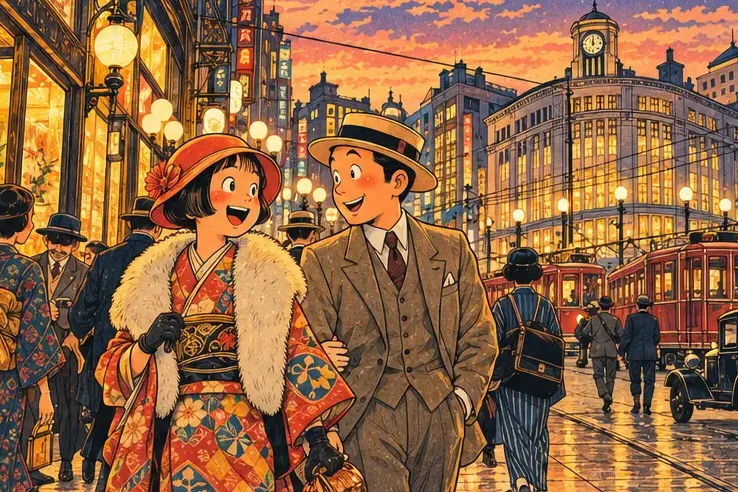
The cities were changing quickly. People rode trams, shopped at department stores, drank coffee in cafés and listened to jazz and the new radio (broadcasts began in 1925). Young women with bobbed hair and Western clothes were called moga (“modern girls”), young men mobo. Magazines, cinema and cheap books reached mass audiences.
The Great Kantō Earthquake
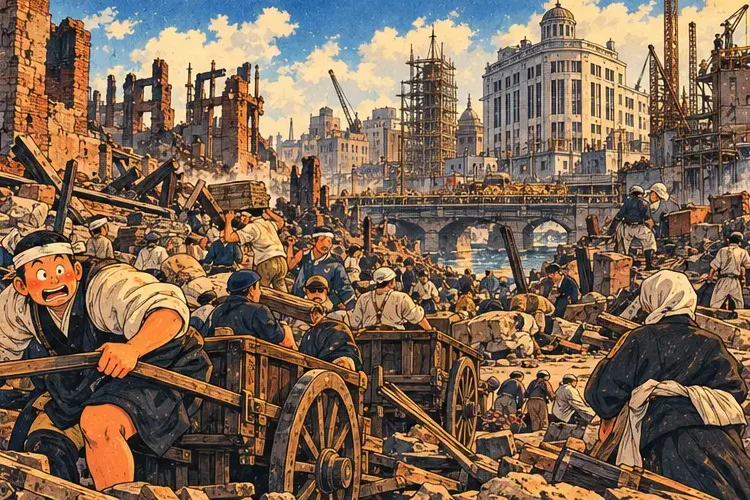
At noon on 1 September 1923, a magnitude 7.9 earthquake struck the Kantō region. Fires swept through Tokyo and Yokohama. More than 100,000 people died. In the chaos, rumours led to violence against Koreans and others living in Japan, a dark episode that historians and memorial groups continue to document.
Tokyo’s recovery shaped the modern city: wider streets, parks, and concrete buildings.
See it today
- Tokyo Station Marunouchi building (opened 1914): a red-brick landmark restored in 2012.
- Tokyo Reconstruction Memorial Museum and the Memorial Hall at Yokoami-chō Park (Sumida, Tokyo): about the 1923 earthquake and later disasters.
- Ginza (Tokyo): the district where department stores and cafés defined the age, now mixed with newer buildings.
- Yokohama: the port town, rebuilt after 1923, with the historic Red Brick Warehouse.
Festival connection
Tokyo’s great festivals continued through disaster and rebuilding. See Kanda Matsuri and the Sumida River Fireworks.