Home › Taishō & early Shōwa · 1931 – 1945
The Road to War, 1931–1945
Quick version
- In 1931 army officers staged the Mukden Incident and seized Manchuria.
- Political assassinations and military influence weakened party government.
- War with China widened in 1937; Japan attacked Pearl Harbor in December 1941.
- Japan's invasions and occupations caused immense suffering across Asia; the war ended in 1945.
This chapter has less humour than most. The events were painful for many millions of people, in Japan and elsewhere.
From party government to military influence
Economic crisis after 1929 hit farmers hard and made many Japanese receptive to calls for strong action. Military officers argued that expansion would secure resources. In September 1931, officers of the Kwantung Army blew up a section of railway at Mukden and blamed China, using it as a pretext to seize Manchuria. In 1932 Japan set up the puppet state of Manchukuo.
At home, assassins killed political leaders, including Prime Minister Inukai Tsuyoshi on 15 May 1932, and in the attempted coup of 26 February 1936 young officers murdered several officials. Party governments lost influence to military-backed cabinets.
The war widens
In July 1937 fighting at the Marco Polo Bridge grew into full-scale war with China. In Nanjing in the winter of 1937–38, Japanese forces killed very large numbers of civilians and prisoners. Scholars debate the numbers, but not that it happened. The war dragged on, with Japan unable to end it. In 1940 Japan signed the Tripartite Pact with Germany and Italy and moved into French Indochina, prompting the United States to restrict oil exports.
The Pacific War
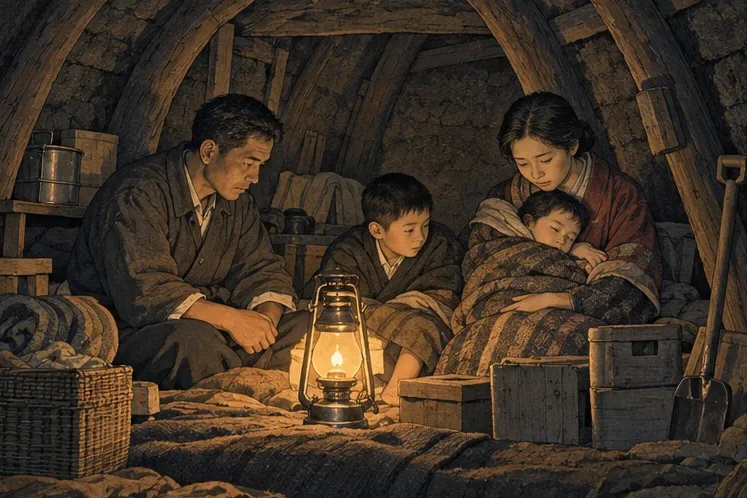
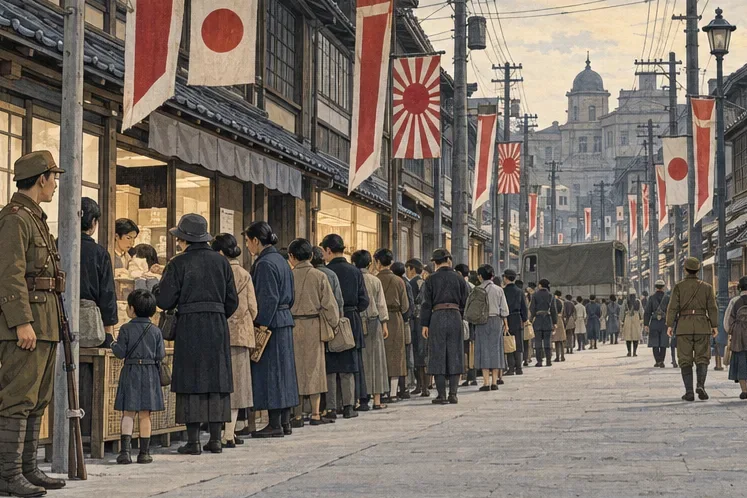
On 7 December 1941 (8 December in Japan) Japan attacked Pearl Harbor and invaded Southeast Asia. Early victories gave way to defeat, beginning with Midway in June 1942. Across Asia, occupation brought forced labour, hunger and violence. At home, food was rationed, schoolchildren were sent to work and students were drafted. From 1944 American bombing raised cities to ashes, including Tokyo on 9–10 March 1945, and the Battle of Okinawa (April–June 1945) killed many civilians. The war ended after the atomic bombings of Hiroshima and Nagasaki (see the next chapter) and the Soviet entry into the war.
Visiting with care
Many museums address this period. Treat them as places of remembrance, and note that they present different perspectives.
See it today
- Showa-kan (Tokyo): a museum of civilian life during and after the war.
- Tokyo Raid and War Damage Memorial Center (Tokyo): about the air raids.
- Okinawa Prefectural Peace Memorial Museum and Peace Memorial Park (Itoman): the Battle of Okinawa.
- Chiran Peace Museum for Kamikaze Pilots (Minamikyūshū, Kagoshima): letters and photographs of the young pilots.
Reflection
Few visitors will want festivals on this page. If you would like some lighter relief afterwards, Japan Festival Atlas is a good place to browse.