Home › Sengoku & Azuchi-Momoyama · 1600
Sekigahara: The Battle That Decided Everything
Quick version
- After Hideyoshi died in 1598, Tokugawa Ieyasu and Ishida Mitsunari led rival coalitions.
- The battle at Sekigahara took place on 21 October 1600 and lasted roughly a day.
- Betrayals decided it, most famously Kobayakawa Hideaki switching sides.
- Ieyasu became shogun in 1603 and destroyed the Toyotomi at Osaka in 1615.
When Hideyoshi died in 1598, his heir Hideyori was only five. Japan’s great lords were left with an awkward question: who is really in charge? The two main answers were Tokugawa Ieyasu, the powerful lord of the Kantō region, and Ishida Mitsunari, a loyal Toyotomi administrator.
The battle
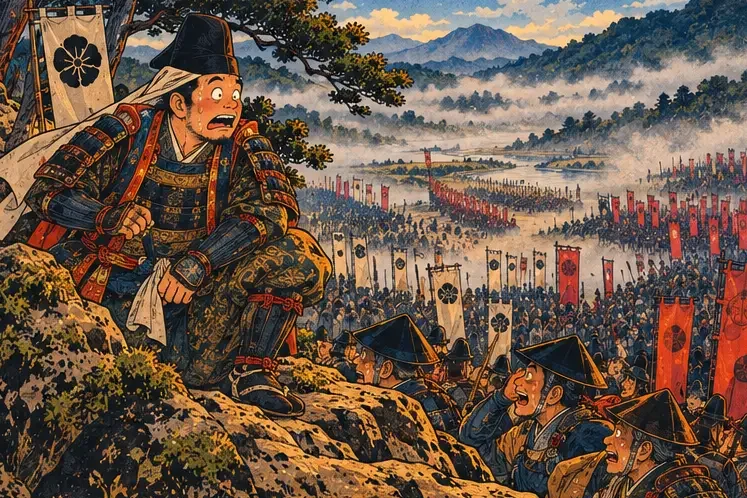
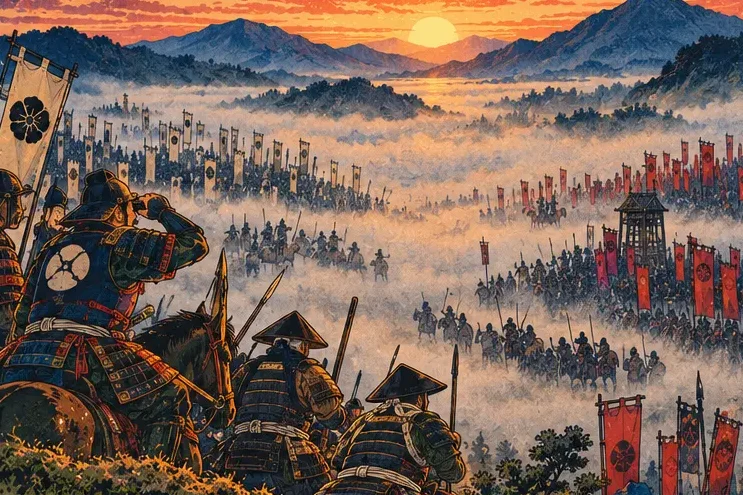
On 21 October 1600 the two coalitions met in a narrow valley at Sekigahara (in modern Gifu). Perhaps around 150,000 men took part, on a field that was about to decide the country’s fate. Fighting was even for hours. Then Kobayakawa Hideaki, who had secretly promised to defect, finally turned on the western side. The collapse came quickly. Mitsunari was captured and executed.
Many other lords had also stayed out of the fight, or had made secret deals. The result: Ieyasu won with allies, trickery and timing, as much as with swords.
What came after
- In 1603 Ieyasu became shogun, founding the Tokugawa shogunate (Edo period).
- Defeated lords lost land. The Shimazu and Mōri, who were on the losing side but survived, nursed grudges for 250 years. Their descendants helped overthrow the shogunate in the 1860s.
- In 1615, after sieges at Osaka, the Toyotomi line ended.
See it today
- Sekigahara Battlefield Memorial Museum (Sekigahara, Gifu): a clear introduction, with a short film and a battlefield map.
- The battlefield walk: look for the flag markers where each commander camped. Rent a bicycle from the station area.
- Ieyasu’s first camp and the hilltop view toward Kobayakawa’s position, both on the walking trail.
- Access: Sekigahara Station on the JR Tōkaidō Line, about an hour from Nagoya.
Festival connection
Sekigahara holds its own festival in autumn with armoured reenactments. For a bigger show of samurai riders, see the Sōma Nomaoi in Fukushima or the Jidai Matsuri in Kyoto.