Home › Muromachi · 1300s – 1500s
Pirates, Tally Trade and the Ryūkyū Kingdom
Quick version
- Wokou pirates raided the coasts of Korea and China.
- Yoshimitsu opened tally trade with Ming China (1404) and suppressed piracy.
- The Ryūkyū Kingdom, unified in 1429, traded with China, Japan, Korea and Southeast Asia.
- Naha's port and Shuri Castle were the kingdom's heart.
Japan’s relationship with the sea in the Muromachi period was complicated.
Wokou: the pirates
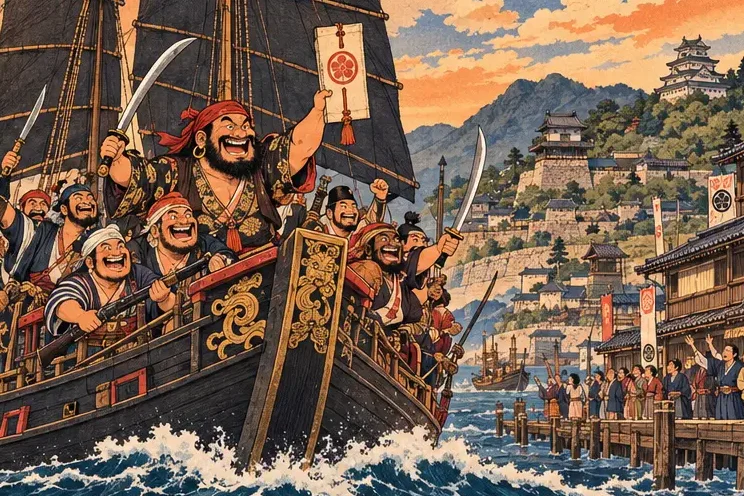
From the 1300s, groups of raiders and smugglers from western Japan (and elsewhere) attacked the coasts of Korea and China. They were known as wokou (wakō in Japanese). The Ming dynasty, newly founded in 1368, wanted them stopped.
Tally trade
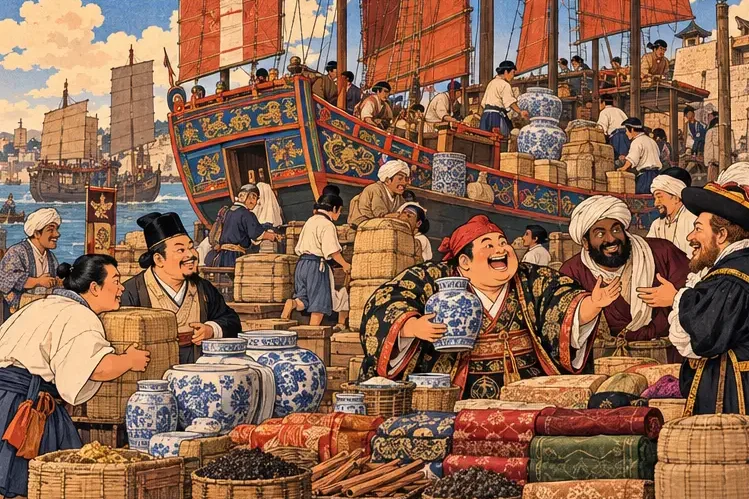
Shogun Ashikaga Yoshimitsu cooperated, and in 1404 began the tally trade (kangō bōeki) with Ming China. Each official ship carried a numbered tally tag that matched a half held by the Chinese. Japan sent sulphur, swords and copper and received copper coins, silk and books. The Ming emperor even gave Yoshimitsu the title “King of Japan”, a diplomatic fiction that offended later critics.
The Ryūkyū Kingdom
Further south, a different kingdom was rising. In 1429 King Shō Hashi united the islands of Okinawa into the Ryūkyū Kingdom. Its ships travelled to China, Korea, Japan, Vietnam, Siam and Malacca, becoming a hub of intermediary trade. A famous bell cast in 1458 declared the kingdom a bridge between nations.
Shuri Castle in Naha was its capital. The kingdom kept its own language, religion and arts, a distinct culture that remains a point of pride in Okinawa today.
See it today
- Shuri Castle (Naha, Okinawa): the main hall burned down in a 2019 fire; reconstruction is ongoing and visitors can see the work and the surviving castle site. Check what is open before you go.
- Gusuku sites and related remains of the Kingdom of Ryukyu: a UNESCO World Heritage listing that includes Nakijin and Katsuren castles.
- Okinawa Prefectural Museum: Ryūkyū history and art.
- Tsuboya Pottery Street (Naha): ceramics with a long history.
Festival connection
Naha holds a spectacular giant tug-of-war every October: see the Naha Great Tug-of-War.