Home › Muromachi · 1467 – 1477
The Ōnin War: Ten Years That Burned Kyoto
Quick version
- A dispute over who would succeed shogun Yoshimasa split the Hosokawa and Yamana clans.
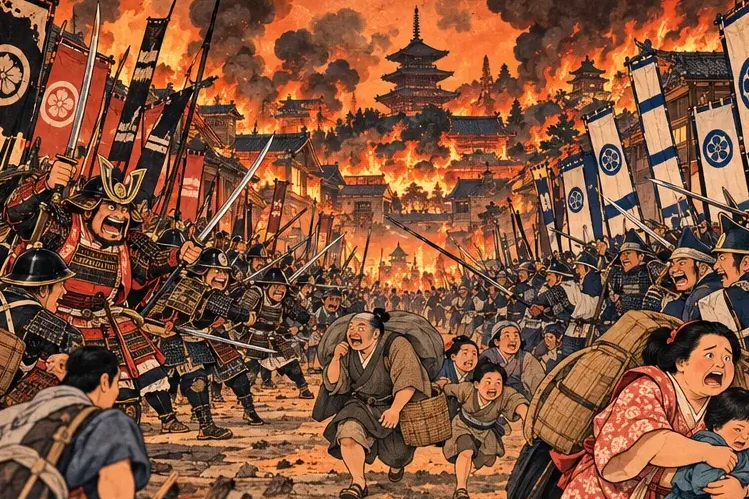
- Fighting in Kyoto lasted about ten years and burned much of the city.
- Foot soldiers called ashigaru became important; plundering became common.
- Local warlords took charge in the provinces, ushering in the Sengoku period.
By 1467 Shogun Ashikaga Yoshimasa had no son, and appointed his brother as heir. Then his wife gave birth to a boy. Two factions emerged, led by powerful regents: Hosokawa Katsumoto (East army) and Yamana Sōzen (West army). Their own families had succession quarrels too. In 1467, fighting broke out in Kyoto.
A war with no winner
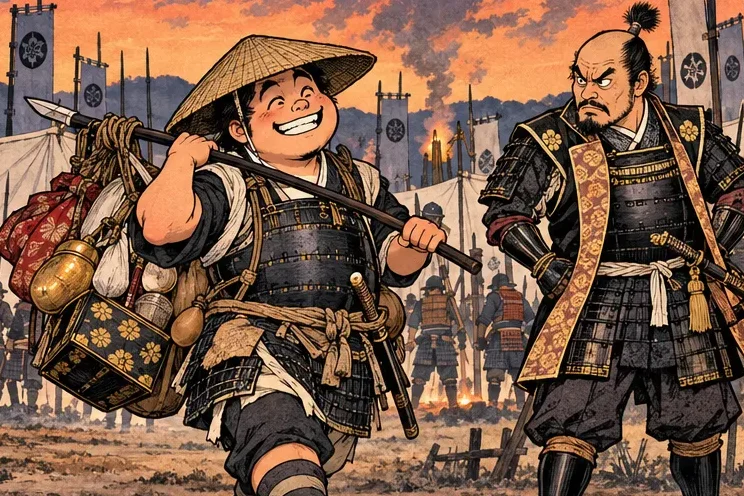
The Ōnin War (1467–77) dragged on for about ten years. Neither side could win. The city’s temples, mansions and shrines burned, and many nobles left. Foot soldiers called ashigaru (“light-feet”), recruited from commoners, were used in large numbers and plundered freely.
When the leaders died (both in 1473), the war fizzled out, but the damage was done. The shogun’s authority collapsed. Local deputies in the provinces simply kept the power they had gathered, which led to the Sengoku period.
Living with it
Kyoto was rebuilt slowly. Its merchants and craftspeople were resilient. The weavers who settled on the site of the Western army’s camp gave their name to the Nishijin (West Camp) textile district, famous for silk brocade. The citizens also revived the Gion Matsuri in 1500 after a long break, one more reason Kyoto’s festivals feel so deeply rooted.
See it today
- Nishijin Textile Center (Kyoto): displays and demonstrations of Nishijin weaving, with kimono shows.
- Kamigoryō Shrine (Kyoto): where the first fighting is said to have occurred. A small monument marks the spot.
- Shōkoku-ji (Kyoto): a Zen temple and site of fierce fighting at the time.
Festival connection
The Gion Matsuri was revived after the war and still fills Kyoto every July.