Home › Taishō & early Shōwa · August 1945
Hiroshima and Nagasaki: Remembering 1945
Quick version
- Hiroshima was bombed at 8:15 a.m. on 6 August 1945; Nagasaki at 11:02 a.m. on 9 August.
- Many tens of thousands died immediately, and many more in the following months from injuries and radiation.
- Emperor Hirohito announced Japan's surrender by radio on 15 August.
- Both cities are now centres of peace education.
This is a serious subject. This chapter is written without jokes, and its illustrations are respectful and quiet.
In the summer of 1945, Japan’s cities had been devastated by bombing. On 6 August 1945, the United States dropped an atomic bomb on Hiroshima, and on 9 August, a second on Nagasaki. The Soviet Union declared war on Japan on 8 August. On 15 August, Emperor Hirohito announced Japan’s acceptance of the Allied terms by radio, the first time most people had heard his voice. The formal surrender was signed on 2 September.
The human toll
Estimates vary, but roughly 140,000 people in Hiroshima and 70,000 in Nagasaki are thought to have died by the end of 1945, most of them civilians. Survivors, called hibakusha, faced illness and discrimination for decades. Their testimony has shaped Japan’s strong anti-nuclear stance.
Sadako and the cranes
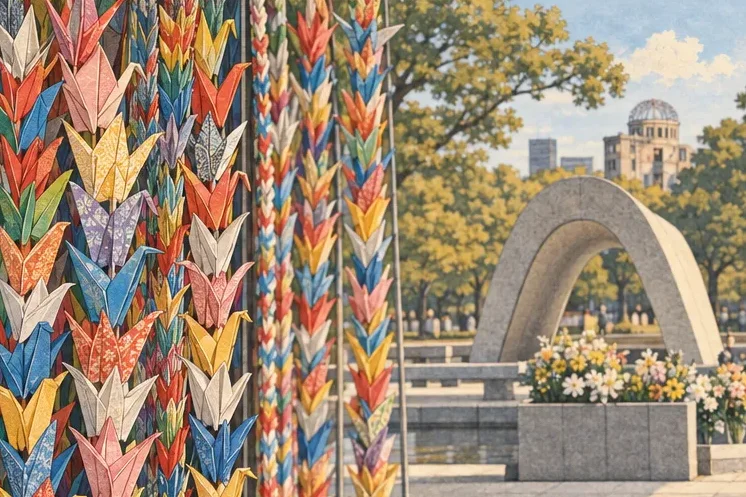
Sadako Sasaki was two years old in Hiroshima in 1945 and developed leukemia as a child. She began folding paper cranes, inspired by the belief that a thousand cranes could grant a wish. She died in 1955. Her classmates raised funds for a Children’s Peace Statue, and visitors from around the world still bring paper cranes.
Visiting
Both cities are welcoming to visitors and take care to explain what happened.
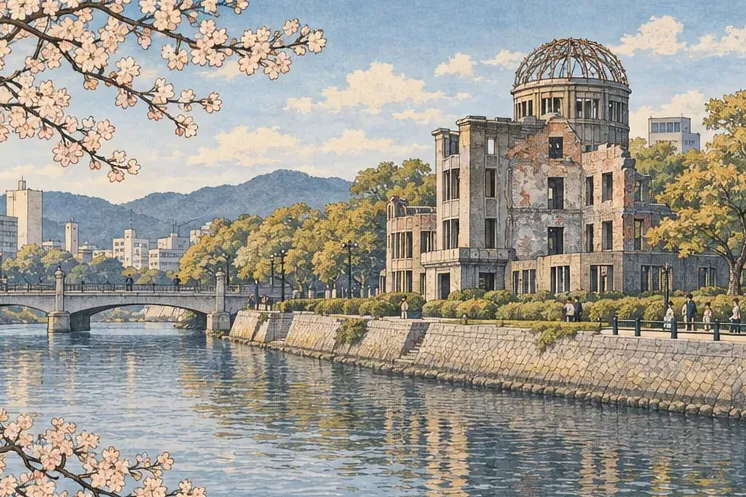
- Hiroshima Peace Memorial Park and Museum: the A-Bomb Dome (a UNESCO World Heritage Site), the Cenotaph, the Children’s Peace Statue, and a museum with personal belongings.
- Nagasaki Peace Park, Atomic Bomb Museum and the Hypocenter Park: and the ruins of Urakami Cathedral.
- Miyajima is a short ferry ride from Hiroshima, and combining it with a visit can offer room for reflection.
- Memorial ceremonies are held on 6 August (Hiroshima) and 9 August (Nagasaki).
Visitor etiquette
Keep voices low, avoid smiling selfies at the monuments, and respect people who are praying or sharing their testimony.
Remembering
Japan Festival Atlas covers lantern and memorial events across the country if you want to learn about other ways Japan remembers its dead.