Home › Postwar to Reiwa · 1945 – 1952
The Occupation and the Peace Constitution
Quick version
- General Douglas MacArthur led the Allied Occupation (mainly American) from 1945 to 1952.
- Reforms included land reform, breaking up zaibatsu conglomerates, and votes for women.
- The 1947 Constitution made the emperor a symbol and renounced war in Article 9.
- The San Francisco Peace Treaty restored sovereignty in April 1952.
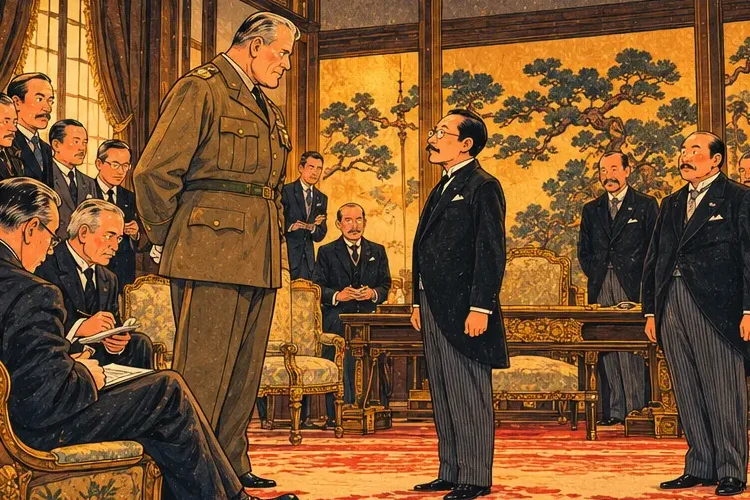
After the surrender, Japan was occupied by Allied forces, led in practice by the United States under General Douglas MacArthur, with the title Supreme Commander for the Allied Powers (SCAP). The Occupation lasted from 1945 to 1952.
Reforms
- Demilitarisation: the army and navy were dissolved.
- War crimes trials: the Tokyo Trials (1946–48) tried top leaders.
- Land reform: tenant farmers could buy the land they worked, reducing rural inequality.
- Economic reform: the large family-run zaibatsu conglomerates were broken up (though later groups reformed).
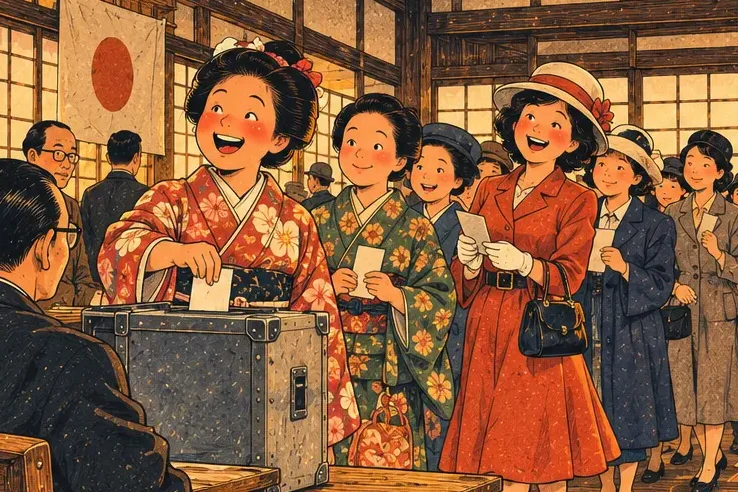
- Women’s suffrage came in 1945–46, and women voted in the 1946 election.
- Education was reformed, with textbooks revised and schooling extended.
- On 1 January 1946, Emperor Hirohito’s rescript stated that he was not a living god.
The new constitution
The Constitution of Japan was promulgated on 3 November 1946 and took effect on 3 May 1947 (both are now national holidays). It declares that sovereignty rests with the people and the emperor is “the symbol of the State.” Article 9 renounces war as a sovereign right and states that Japan will not maintain war potential. In practice the Self-Defense Forces were created in 1954, and debates about Article 9 continue.
Ending the Occupation
As the Cold War developed and the Korean War began in 1950, the United States wanted Japan as an ally. The San Francisco Peace Treaty was signed in 1951 and took effect in April 1952, when Japan regained sovereignty. A US–Japan security treaty was signed the same day.
See it today
- National Diet Building (Tokyo): where the postwar parliament sits. Tours are free in English.
- Showa-kan (Tokyo): postwar daily life and rationing.
- Shōwa Retro towns such as Ōme (Tokyo): streets that preserve a mid-century atmosphere.
Festival connection
Postwar recovery is often told through festivals returning to the streets. Browse examples on Japan Festival Atlas.