Nikkō: The Shrine Built for a Shogun-Turned-God
Quick version
- Ieyasu died in 1616 and was enshrined as a deity, 'Tōshō Daigongen'.
- His grandson Iemitsu rebuilt the Tōshōgū lavishly in 1634–36.
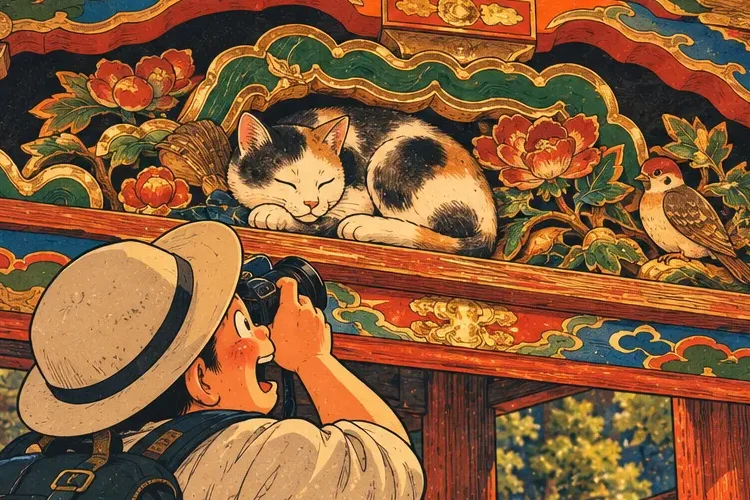
- Famous carvings include the 'Three Wise Monkeys' and the Sleeping Cat.
- The Shrines and Temples of Nikkō are a UNESCO World Heritage Site.
When Tokugawa Ieyasu died in 1616, he left instructions to be buried on a mountain at Nikkō, north of Edo, and enshrined as a protector of Japan. He became a deity, Tōshō Daigongen (“Great Incarnation Illuminating the East”).
From modest to magnificent
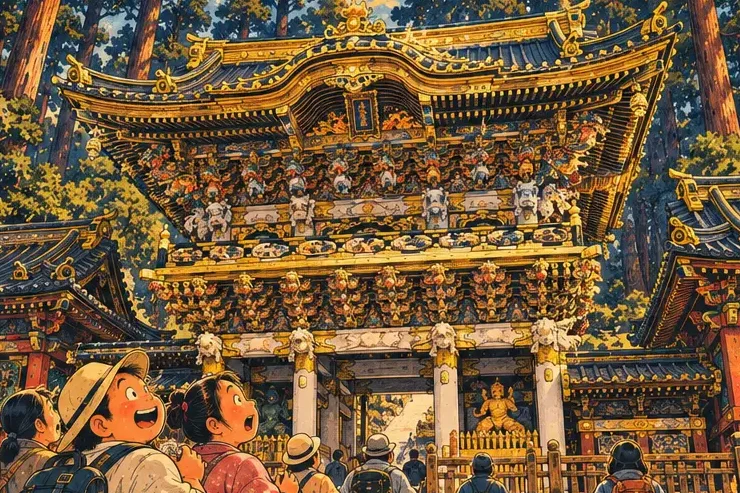
The first shrine was simple. In 1634–36, Ieyasu’s grandson Iemitsu rebuilt it on a vast scale, with thousands of craftsmen, gold leaf and elaborate carvings. The message: the Tokugawa are chosen by heaven.
Carvings to find
- Yōmeimon Gate: crowded with carved figures, so detailed that people say you could stare all day.
- Three Wise Monkeys (“see no evil, hear no evil, speak no evil”) on the sacred stable. The panel is one of a series that shows the stages of a human life.
- Nemuri-neko (Sleeping Cat): a small carving over a doorway on the path to Ieyasu’s tomb.
- Ieyasu’s tomb (Okusha): up 200-odd stone steps, quiet and simple compared with the gaudy shrine.
Buddhist and Shintō together
Nikkō is more than the Tōshōgū. Rinnō-ji (a Buddhist temple) and Futarasan Shrine (a Shintō shrine older than the Tokugawa) share the site. The group of shrines and temples became a UNESCO World Heritage Site in 1999.
Beyond the shrines
Nikkō is also known for Kegon Falls, Lake Chūzenji and autumn leaves.
Visiting tips
- From Tokyo, take a direct limited express train from Asakusa or Shinjuku, about two hours.
- Allow at least half a day. Start early to beat tour groups.
- Entrance tickets are separate for the main shrine areas.
Festival connection
The Nikkō Tōshōgū Spring Grand Festival (mid-May) features a procession of about a thousand costumed samurai. An autumn festival follows in October.