Edo Highways: The Tōkaidō, the Nakasendō and the Original Road Trip
Quick version
- Five main highways (Gokaidō) radiated from Nihonbashi in Edo.
- The Tōkaidō (coastal) had 53 post stations; the Nakasendō (mountain) had 69.
- Travellers needed permits and passed checkpoints (sekisho).
- Pilgrimages to Ise and Kumano were popular excuses for a holiday.
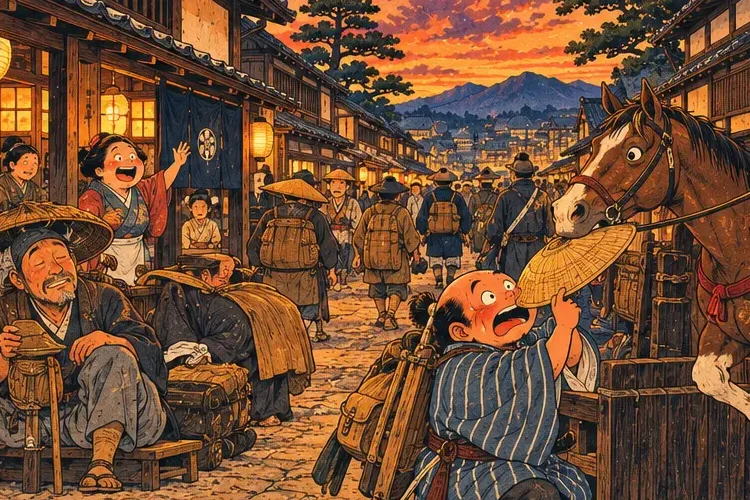
In Edo times, the main roads were the highways of the nation, and walking them was how most people travelled. All started at Nihonbashi bridge in Edo. The Gokaidō (five highways) were the Tōkaidō, Nakasendō, Kōshū Kaidō, Ōshū Kaidō and Nikkō Kaidō.
Tōkaidō vs Nakasendō
- Tōkaidō: the coastal road between Edo and Kyoto, with 53 post stations. Hiroshige’s famous print series The Fifty-three Stations of the Tōkaidō made it a pop-culture hit.
- Nakasendō: the mountain route, with 69 stations, more scenic and less prone to flooded rivers.
Post towns (shukuba) offered inns, food, porters and horses. Daimyō travelling under sankin-kōtai kept them busy.
Rules of the road
Checkpoints (sekisho) controlled movement, especially of weapons and women heading toward Edo, a phrase summarised as “guns coming in, women going out”. Travellers carried passes. Even so, ordinary people travelled more than you might expect.
Pilgrimage as holiday
Pilgrimages gave people a respectable excuse to go sightseeing. The most popular were to the Ise Grand Shrine, and in some years millions headed there. Stories say dogs were occasionally sent to Ise by their owners with money and a tag around the neck. Another route, the Kumano Kodō, crosses the Kii mountains.
Walk it yourself
- Magome to Tsumago (Nagano and Gifu, Nakasendō): about 8 km on stone paths between two preserved post towns. A classic first hike.
- Narai-juku (Nagano): a long street of old inns.
- Hakone Old Tōkaidō (Kanagawa): stone paving and giant cedar trees, with the reconstructed Hakone Checkpoint beside Lake Ashi.
- Kumano Kodō (Wakayama): a UNESCO World Heritage pilgrimage trail.
- Ise Grand Shrine (Mie): rebuilt every 20 years in a tradition that goes back centuries.
Luggage forwarding services between Magome and Tsumago make the walk easy even if you arrive with a suitcase.
Festival connection
The Hakone Daimyō Gyōretsu in November recreates a feudal lord’s procession along the old Tōkaidō. More post-town and shrine events at Japan Festival Atlas.