The Mongol Invasions: Typhoons, Walls and an Unpaid Bill
Quick version
- Kublai Khan demanded Japan's submission; the Hōjō regent Tokimune refused.
- Mongol-Korean forces attacked Hakata in 1274 and again in 1281.
- Storms (later called kamikaze, 'divine wind') damaged the fleets, especially in 1281.
- Samurai who had fought received no new land, and resentment toward the Kamakura bakufu grew.
In the 1260s, Kublai Khan, ruler of the Mongol Empire and China’s Yuan dynasty, sent letters to Japan demanding that it submit. The Kamakura regent Hōjō Tokimune refused. Kublai prepared an invasion.
1274 and 1281
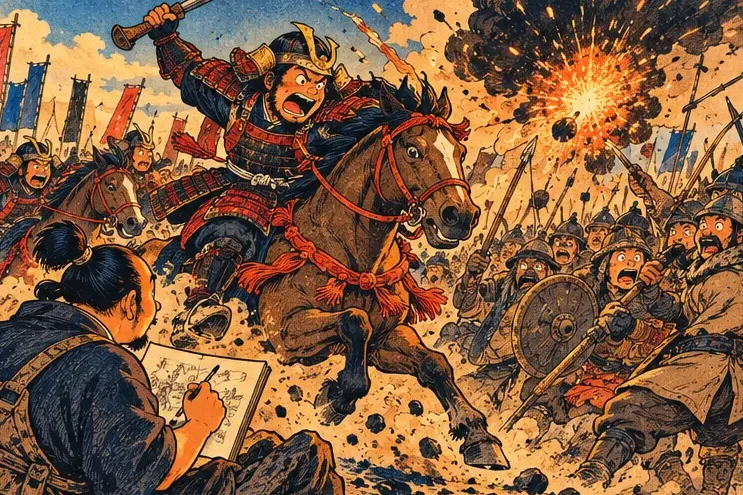
- 1274 (Bun’ei): a fleet of Mongol and Korean troops landed near Hakata in northern Kyushu. The invaders used unfamiliar weapons, including exploding projectiles, and fought in organised formations rather than one-on-one duels, which surprised the samurai. The attackers withdrew, partly because of a storm.
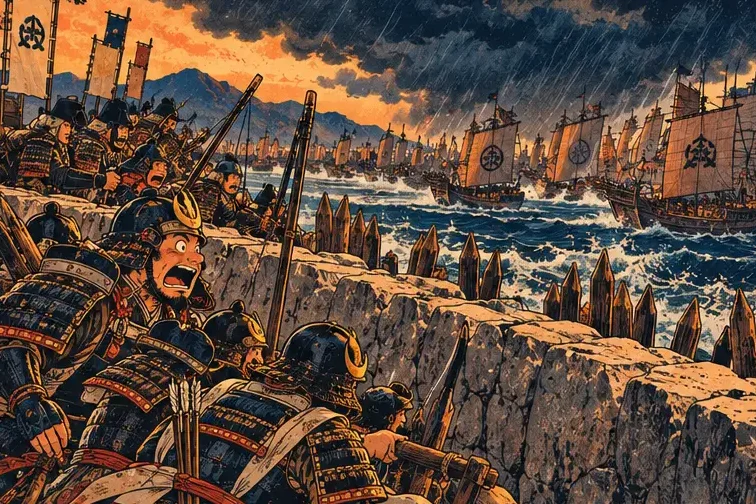
- 1281 (Kōan): a much larger force came in two groups. Japan had meanwhile built a long stone wall along Hakata Bay, the genkō bōrui. The defenders held the invaders to the beaches until a powerful storm wrecked many of their ships. The storms became known as the kamikaze, “divine wind”, and later fed the belief that Japan was protected by the gods.
Victory, and a bill nobody could pay
Fighting off an invasion brought no captured land to hand out, unlike a normal war. Samurai who had spent their savings to fight went unrewarded. Some, like Takezaki Suenaga, had illustrated scrolls made of their deeds to petition for a reward. The shogunate’s promise of “gratitude and service” was breaking down. Within about fifty years, the Kamakura bakufu fell.
See it today
- Genkō Bōrui remains (Fukuoka): sections of the stone wall can be seen at Imazu and near Momochi Seaside Park.
- Fukuoka City Museum: material on the invasions and scroll copies.
- Hakozaki Shrine (Fukuoka): said to have been where prayers for victory were offered.
Festival connection
Hakata’s summer festival, the Hakata Gion Yamakasa, takes place every July in the same city that held the line against the invaders. In September, Hakozaki Shrine hosts the Hōjō-ya fair.