Kamakura: Japan Gets Its First Samurai Government
Quick version
- After the Taira fell in 1185, Yoritomo built a government at Kamakura, far from Kyoto.
- He appointed shugo and jitō to keep order, and became shogun (traditionally dated 1192).
- Samurai gave loyalty and military service; the shogun gave land and protection.
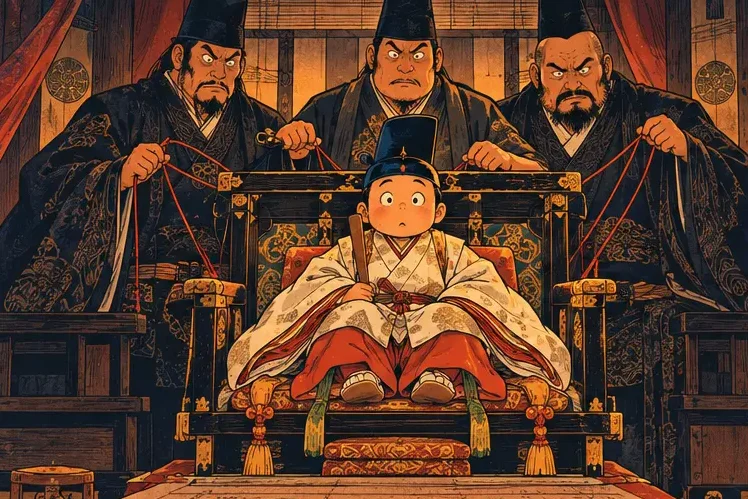
- After Yoritomo's death the Hōjō family ruled as regents (shikken).
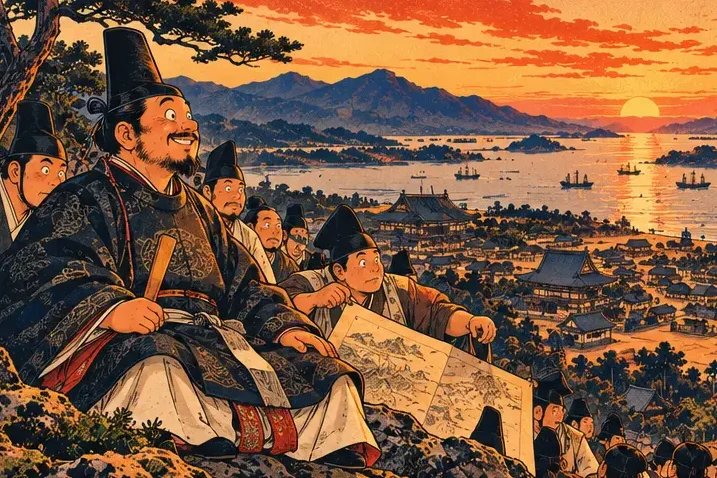
When the Taira clan fell at Dan-no-ura in 1185, the Minamoto leader Minamoto no Yoritomo did something new. He did not move into Kyoto and join the court. He stayed in the east and built a warrior government at Kamakura.
Why Kamakura?
It was Yoritomo’s family base, and a very defensible one: hills on three sides, the sea on the fourth, and only narrow passes in between. The government that grew there is called the bakufu, “tent government”, after the military camp.
How it worked
- In 1185 Yoritomo got permission to appoint shugo (provincial protectors) and jitō (estate stewards), a way of placing his men all over the country.
- In 1192 (the traditional date) he was named seii taishōgun, usually shortened to shogun.
- The system ran on the goon and hōkō idea: “gratitude and service”. Vassals (gokenin) served and fought for the shogun, who rewarded them with land and protection.
The emperor and court in Kyoto still existed, so Japan now had two centres of power, one civil and one military.
The Hōjō take the reins
Yoritomo died in 1199. His wife’s family, the Hōjō, took charge as regents (shikken) for the shogun, who soon became a figurehead. In 1221 the retired emperor Go-Toba tried to overthrow the Hōjō in the Jōkyū War and lost, which cemented the bakufu’s authority. In 1232 the Hōjō issued the Goseibai Shikimoku, a law code for warriors that was short and practical.
See it today
- Tsurugaoka Hachimangū (Kamakura): the shrine at the heart of the city, reached by a grand approach lined with cherry trees.
- Yoritomo’s grave (Kamakura): a small, quiet monument.
- Kamakura Museum of National Treasures: Kamakura-era art and sculpture.
- Kamakura is about an hour from Tokyo by train and is an easy day trip.
Festival connection
Samurai archery on horseback is still performed at Tsurugaoka Hachimangū: see the Yabusame there in September.