Trains, Silk and Suits: Japan Modernises at Top Speed
Quick version
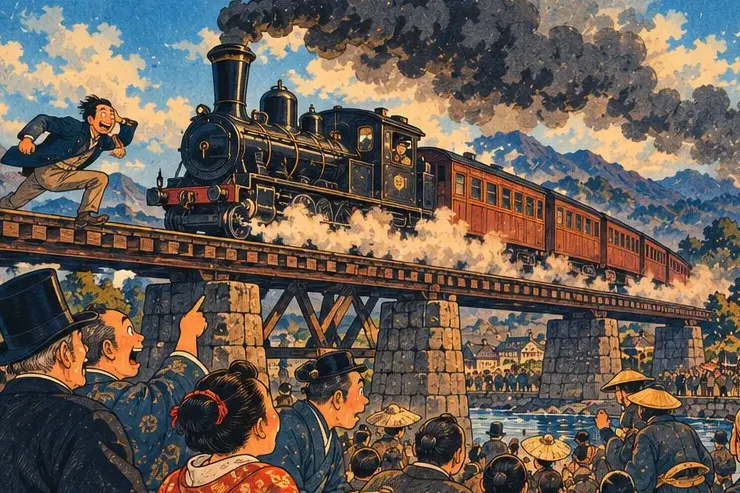
- The first railway (Shimbashi–Yokohama) opened in 1872.
- The Iwakura Mission (1871–73) toured the US and Europe to study the West and renegotiate treaties.
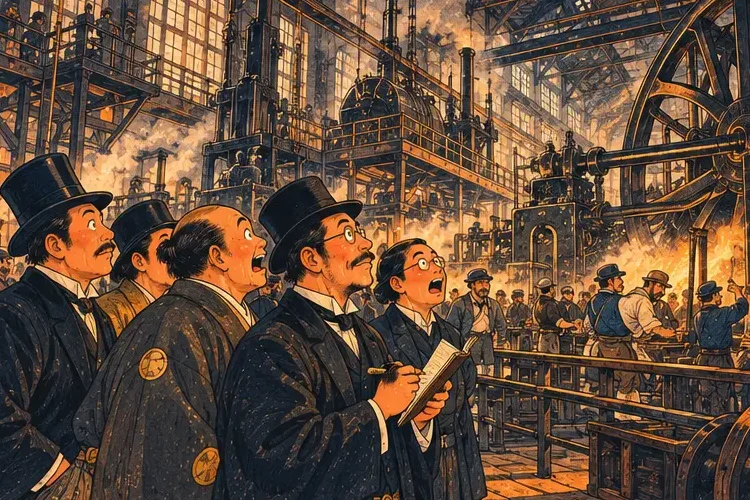
- The government built model factories, such as the Tomioka Silk Mill (1872).
- Compulsory education began in 1872; Western clothes, beef and bread appeared.
Within a few decades, Japan changed from a land of samurai and rice paddies to a country with railways, factories and a modern army. The slogan was bunmei kaika, “civilisation and enlightenment”, and fukoku kyōhei, “rich country, strong army”.
A world tour for the government
From 1871 to 1873, nearly half the government travelled the world on the Iwakura Mission: the United States and Europe. They hoped to renegotiate the unequal treaties. They failed, but returned with a clear idea of what a modern state needed: industry, a constitution, education and a navy.
Railways, mills, schools
- Railways: the first line, from Shimbashi (Tokyo) to Yokohama, opened in 1872.
- Tomioka Silk Mill (1872): a model factory using French machinery. Silk became Japan’s top export for decades.
- Education: from 1872, the school system aimed at teaching every child.
- Foreign experts (oyatoi gaikokujin) were hired to teach engineering, law and medicine.
Daily life changes
Western clothes, haircuts, beef-eating and gaslights spread, first in cities. Brick buildings appeared in Ginza. The calendar was changed to the Gregorian one in 1873.
The cost
Rapid change was hard on farmers, who paid heavy land taxes, and on workers in factories, many of them young women. The era’s prosperity was real, but unequally shared.
See it today
- Tomioka Silk Mill (Gunma): a UNESCO World Heritage Site with the original red-brick warehouses.
- Museum Meiji-mura (Inuyama, Aichi): an open-air museum of relocated Meiji buildings, including the lobby of Frank Lloyd Wright’s old Imperial Hotel.
- Sites of Japan’s Meiji Industrial Revolution (Hagi, Kagoshima, Nagasaki and others): a UNESCO listing covering shipyards, mines and foundries.
- Railway Museum (Saitama): the story of Japanese trains.
Festival connection
Meiji-mura is in Inuyama, home of the Inuyama Festival in April, so you can combine castle, festival and Meiji buildings in one trip.