The Heian Period: Poems, Perfume and the Fujiwara Show
Quick version
- Emperor Kanmu moved the capital to Heian-kyō (Kyoto) in 794.
- The Fujiwara family ruled as regents (sesshō and kanpaku), peaking under Fujiwara no Michinaga.
- Kana scripts let people write Japanese naturally; The Tale of Genji and The Pillow Book followed.
- Provincial warriors rose; the Taira clan under Kiyomori took power before falling in 1185.
In 794 Emperor Kanmu moved the capital to Heian-kyō, today’s Kyoto, partly to escape the powerful Buddhist temples of Nara. The city would stay the imperial capital for over a thousand years.
The Fujiwara take charge
The Fujiwara clan’s trick was marriage. They married their daughters to emperors, then governed as the baby emperor’s grandfather. They held two special posts: sesshō (regent for a child emperor) and kanpaku (regent for an adult one). Their power peaked with Fujiwara no Michinaga (966–1028), who is said to have compared himself to the full moon with nothing missing.
Japanese culture finds its voice
With official missions to Tang China ended in 894, the court developed its own style, known as kokufū bunka:
- Kana (hiragana and katakana) were created from Chinese characters, so Japanese could finally be written the way it was spoken.
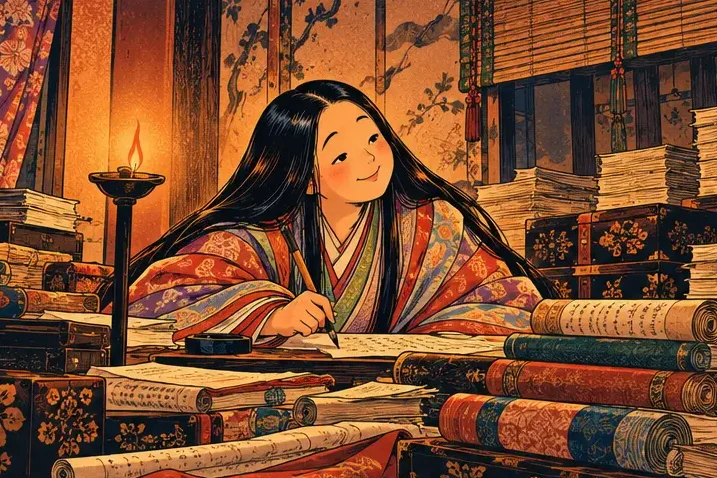
- Murasaki Shikibu wrote The Tale of Genji; Sei Shōnagon wrote The Pillow Book.
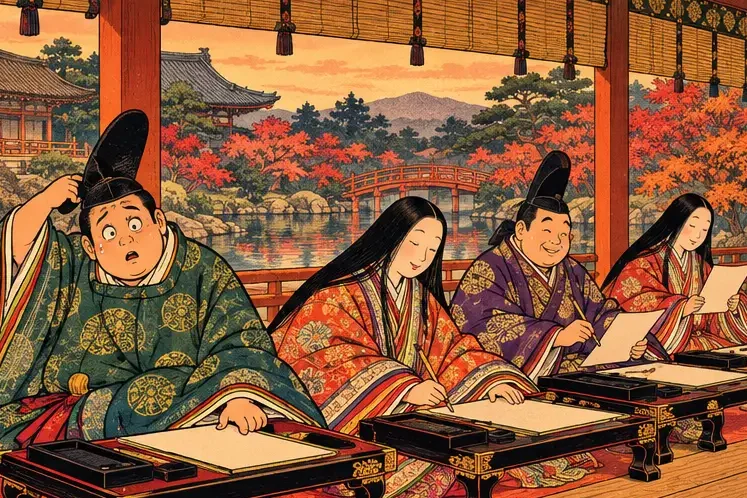
- Shinden-zukuri mansions, yamato-e painting and layered court robes (jūnihitoe) flourished.
- Pure Land Buddhism promised rebirth in paradise; the Byōdō-in Phoenix Hall in Uji was built in 1053.
Warriors on the rise
Outside the capital, estates (shōen) multiplied and landholders armed themselves. These warriors (bushi) later became the samurai. The Taira and Minamoto clans rose; Taira no Kiyomori became chief minister in 1167, but the Minamoto defeated the Taira at Dan-no-ura in 1185, opening the way for the first samurai government in Kamakura.
See it today
- Kyoto: Heian Shrine, built in 1895 as a two-thirds-scale replica of the original Imperial Palace hall, is a good first stop.
- Byōdō-in (Uji): the Phoenix Hall, and it appears on the 10-yen coin.
- Ishiyama-dera (Ōtsu, Shiga): traditionally linked to the writing of The Tale of Genji.
- Itsukushima Shrine (Miyajima): rebuilt by Taira no Kiyomori in the 12th century.
Festival connection
Kyoto’s Gion Matsuri began in 869 as a ritual to calm an epidemic, a very Heian way of dealing with bad luck, and its towering floats parade every July. The Aoi Matsuri in May sends a procession of courtiers in Heian costume through the city. For a whole sweep of history in one parade, see the Jidai Matsuri on 22 October, whose procession ends in the Heian period at Heian Shrine.