Edo Life: Fires, Sumo, Kabuki and the Birth of Fast Food
Quick version
- Most Edoites lived in crowded wooden row houses (nagaya) and fires were common.
- Kabuki, sumo and ukiyo-e flourished as popular entertainment.
- Hokusai and Hiroshige turned everyday scenes into world-famous art.
- Sushi, soba and tempura started as quick street food.
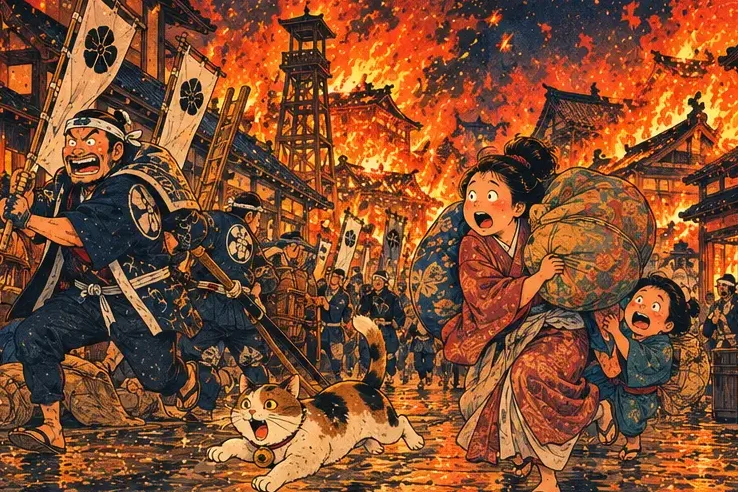
Edo was crowded, noisy and endlessly entertaining. Most people lived in nagaya, long wooden tenements with thin walls and a shared well and toilet. The mix of wood, paper and tight spaces meant fire was a constant danger. The Great Meireki Fire of 1657 destroyed a large part of the city. A saying went: “Fires and fights are the flowers of Edo.”
Entertainment
- Kabuki: founded in the early 1600s by a performer named Okuni, then developed with all-male casts after women were banned from the stage. Edo kabuki favoured bold, heroic acting.
- Sumo: public tournaments raised funds for temples and became a popular spectacle in Ryōgoku.
- Ukiyo-e (“pictures of the floating world”): woodblock prints, cheap enough for ordinary people. Hokusai’s Great Wave (c. 1831) and Hiroshige’s landscapes became icons, and later inspired European artists such as Van Gogh and Monet.
- Public baths (sentō) were social centres.
Edo food
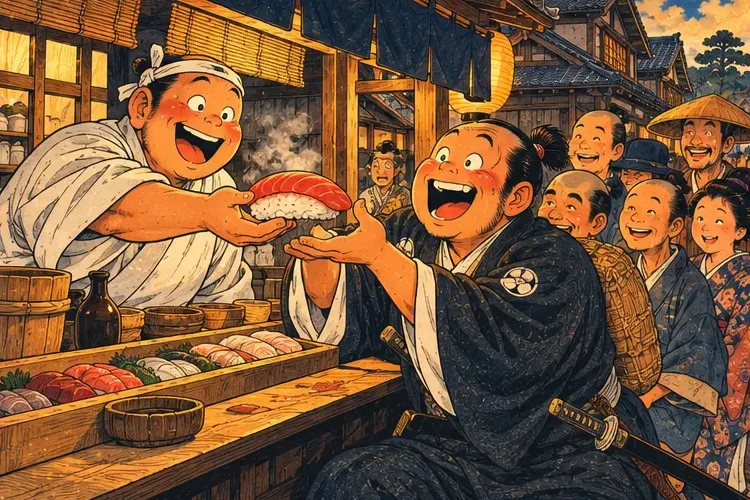
Edo cooks created quick, cheap meals for a city on the move. Soba noodles, tempura and sushi were sold from stalls. Edo-style sushi (nigiri) became popular in the early 1800s, typically pressed by hand and eaten as a snack. It was fast food, not fine dining.
Townspeople culture
The merchant class, officially low in rank, spent money on theatre, fashion and festivals. The result is the lively chōnin (townspeople) culture, still visible in Tokyo’s old districts.
See it today
- Ryōgoku Kokugikan (Tokyo): sumo tournaments are held here in January, May and September.
- Sumida Hokusai Museum (Tokyo): dedicated to Hokusai, near where he lived.
- Ōta Memorial Museum of Art (Harajuku, Tokyo): a leading ukiyo-e collection.
- Kabuki-za (Ginza, Tokyo): see a single act without booking the whole programme.
- Sensō-ji and Asakusa (Tokyo): an Edo-era entertainment district.
Festival connection
Edo traditions live on at Kanda Matsuri, Sanja Matsuri and the Sumida River Fireworks (whose origins go back to 1733). Near Sensō-ji, try the Hōzuki Market in July and the Hagoita Market in December, or the Tori-no-ichi fairs in November.